Domain model overview
Introduction
To ensure seamless data communication and enhance inter-component interactions, Akkuro Lending uses a Unified Domain Model (UDM). This model is built from a functional and business-oriented representation of real-world concepts and objects. It also takes advantage of object-oriented programming principles such as abstraction, inheritance, and polymorphism.
The UDM is a standardized data model that describes domain entities, their attributes, and the relationships between them within a specific functional domain. It establishes a common language that enables consistent communication and understanding across various system components.
The domain model documentation includes diagrams that are based on UML class diagram, but have been simplified for a better approach to focus on the essentials. These diagrams help you understand how data is structured across the platform, improving integration planning and implementation.
Currently, you can explore the following functional domains:
- Counterparties
- Collaterals
- File Documents
- Financing Execution
- Financing Solutions
- Private Financials
- Process Orchestration
- Product Definitions
Select a domain to view its documentation. Each domain page includes a scope description and model diagrams.
How to read diagrams
The diagrams in each document show Akkuro Lending’s data structure by displaying its domain entities, enumerations, and the relationships between them.
| Symbol | Name | Description |
|---|---|---|
 | Class / Domain Entity | Represents a domain entity, a core business object that stores data (attributes) and may relate to other entities. |
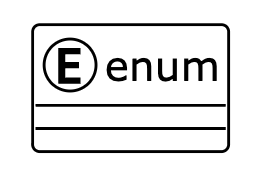 | Enumeration | Contains sets of named identifiers that represent the values or data types of the enumeration. These values are called enumeration literals. |
For details on entity relationships and cardinality, refer to UML class diagram.